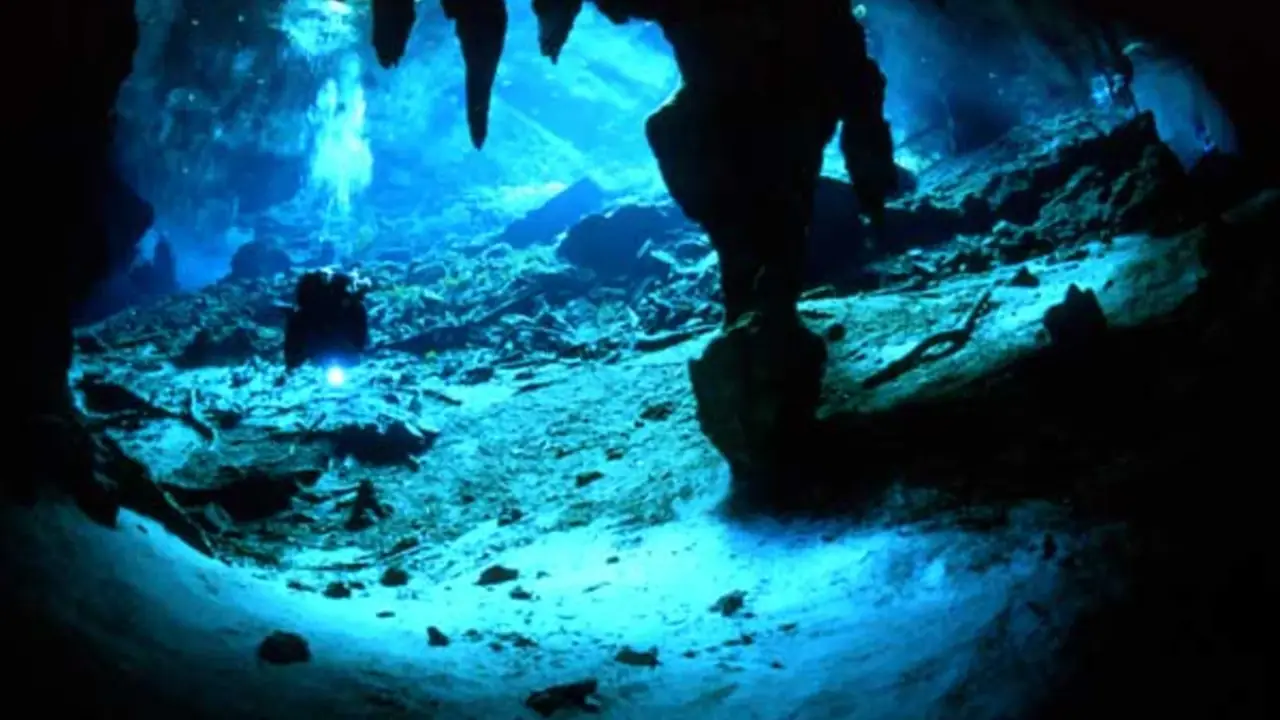
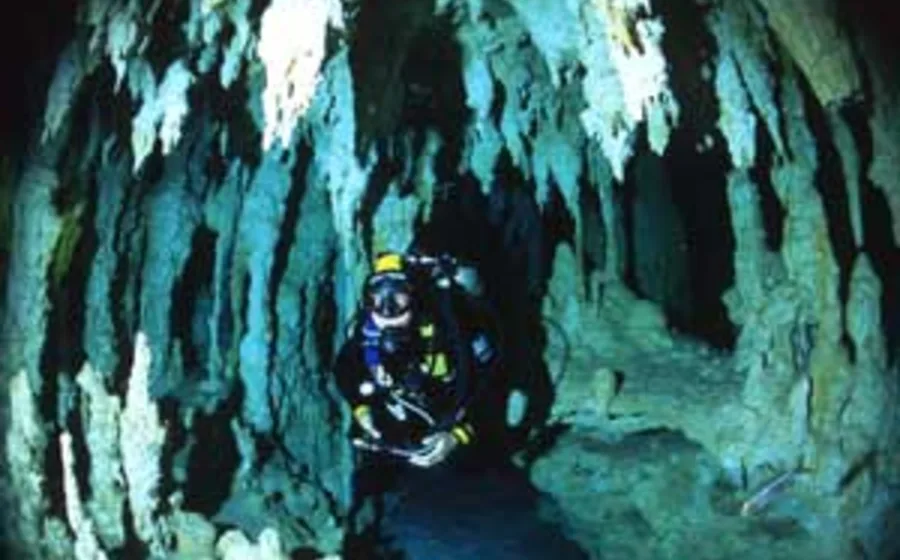
Cavern environment
Light, clear water, and formations make the site beautiful, but the rules still matter.
Dive and snorkel information
Gran Cenote is shallow, clear, and visually impressive. It is friendly for snorkelers, but cavern diving still needs proper control, briefing, and a qualified guide.
Cavern diving
The cavern area is not deep compared with many ocean dives, but it is still an overhead environment. Stay with the guide, remain in the planned zone, keep good buoyancy, and do not enter cave sections unless you are trained and equipped for cave diving.
If you are cave trained and want something beyond the normal visitor route, say that clearly in the reservation inquiry so the right guide and plan can be discussed.
Light, clear water, and formations make the site beautiful, but the rules still matter.
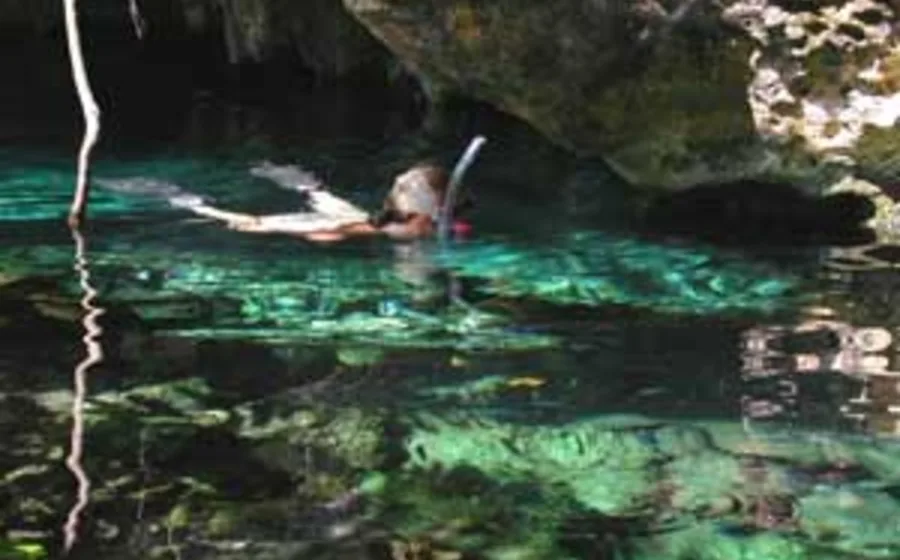
Snorkeling
Gran Cenote is one of the easier cenotes to recommend when some people want to snorkel and others want to dive.
Wooden platforms and clear entry areas make the visit easier for many travelers.
Snorkelers can still see limestone shapes, open-air pools, and cave-like edges without scuba.
It can work well when a group includes divers, snorkelers, and people who simply want to see the cenote.
Propulsion and buoyancy
For cavern diving, small controlled kicks are better than big open-water fin movements. Keep the body horizontal, move mainly from the knees and ankles, and avoid stirring sediment. Good buoyancy keeps the water clear and protects the cenote.
Before you go
For diving questions, include certification level, recent experience, number of people, equipment needs, and where you are staying. For snorkeling or family visits, say how many adults and children are in the group and whether transport is needed.